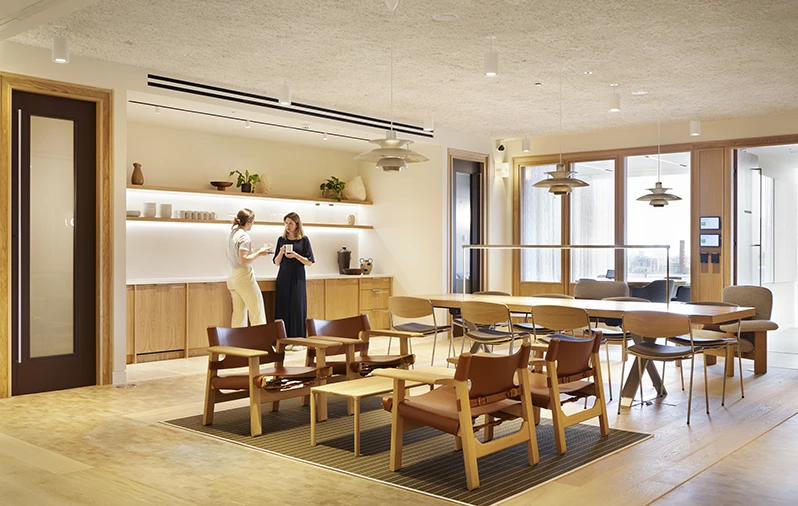
More than a fit out: 20 Triton Street
Our move to 20 Triton Street isn’t just about a new office; it's also about putting into practice everything we’ve learned about sustainability, wellbeing, design, procurement and commercial decision-making in our own workplace. We hope that sharing our journey encourages others to ask the same question we asked ourselves: Can your workplace fit out do more?
Putting our principles into practice – for ourselves
For many years, we’ve helped our customers create workplaces that perform for the long term. The choices made before moving in can shape far more than how a space looks on day one. They influence how healthy it is for the people who use it, how efficiently it operates for years to come, how long materials last and the positive impact created for local communities. This time, we had the opportunity to apply that thinking to our own workplace, creating a space that reflects the principles we help others achieve every day.
Sustainability strengthening decision-making
We have designed our workspace to the highest standards, balancing sustainability impact, performance and value in every decision. The result is stronger environmental, social and commercial outcomes. One of my favourite examples is our boardroom table. Crafted by Camden-based small business Fallen & Felled, the timber came from a tree that had naturally fallen within two miles of our new head office, minimising transport impacts, while the table itself was made locally, supporting jobs and green skills in Camden. As well as telling a local sustainability story, it’s been built to last and will host meetings and conversations for years to come, delivering value for our business long after move-in day.
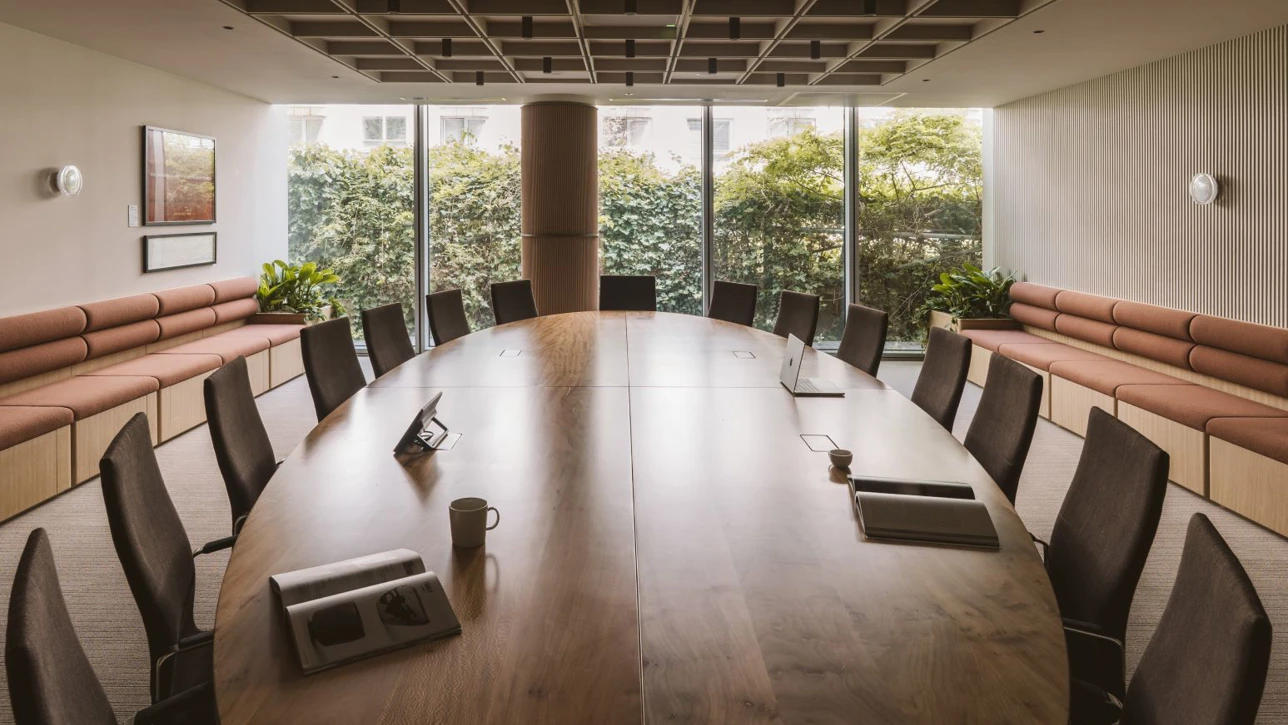
We have designed our workspace to the highest standards, balancing sustainability impact, performance and value in every decision. The result is stronger environmental, social and commercial outcomes. One of my favourite examples is our boardroom table. Crafted by Camden-based small business Fallen & Felled, the timber came from a tree that had naturally fallen within two miles of our new head office, minimising transport impacts, while the table itself was made locally, supporting jobs and green skills in Camden. As well as telling a local sustainability story, it’s been built to last and will host meetings and conversations for years to come, delivering value for our business long after move-in day.
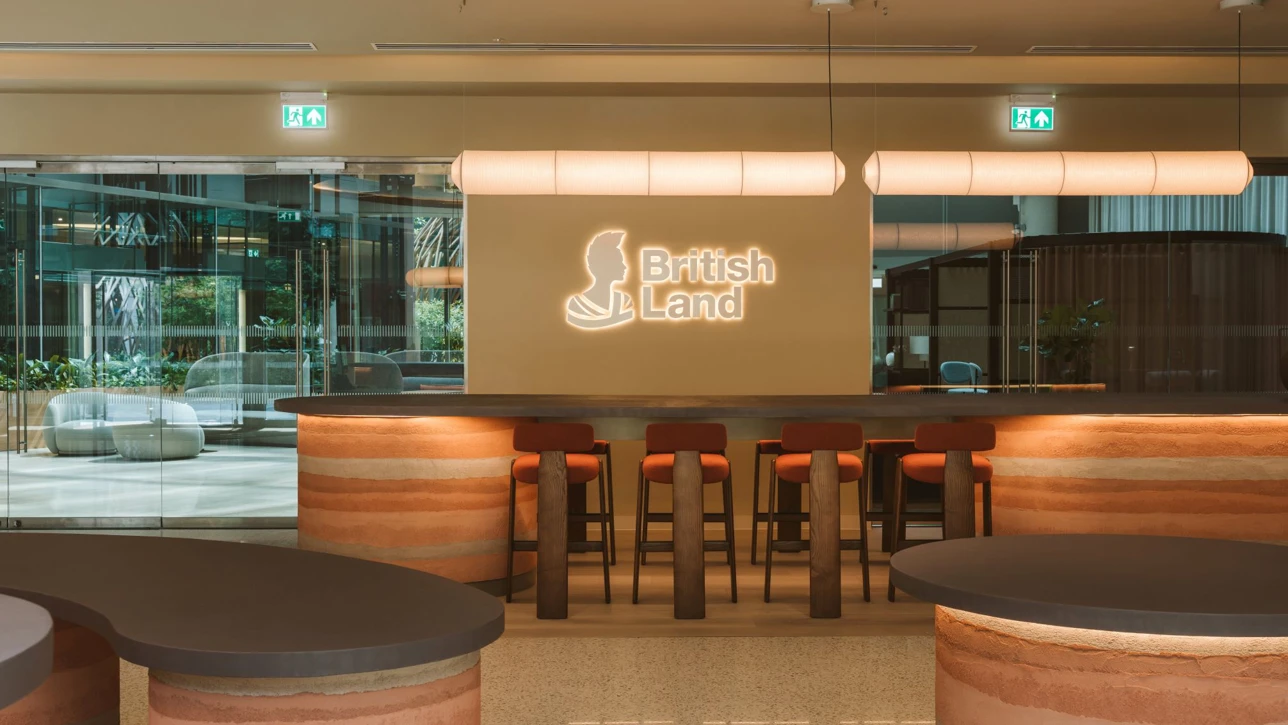
Across the workplace, we've chosen seating that looks and performs as well as new, with reused and refurbished pieces used throughout the space, installed efficient building systems and specified bio-based materials for around 37% of the fit out, enhancing comfort, indoor air quality and wellbeing, while reducing embodied carbon.
Explore our Sustainability Fit Out Brief in Practice
Being on Campus
Our colleagues are looking forward to being part of a campus environment, experiencing the benefits of our strategy first hand. Even during the fit out, we’ve seen the impact of campus relationships: sourcing artwork from Hypha Studios on the campus and our fit out contractor fundraising for Regent's Place Community Fund – a collaboration of campus businesses – and engaging with Camden schools to raise awareness of careers in our sector
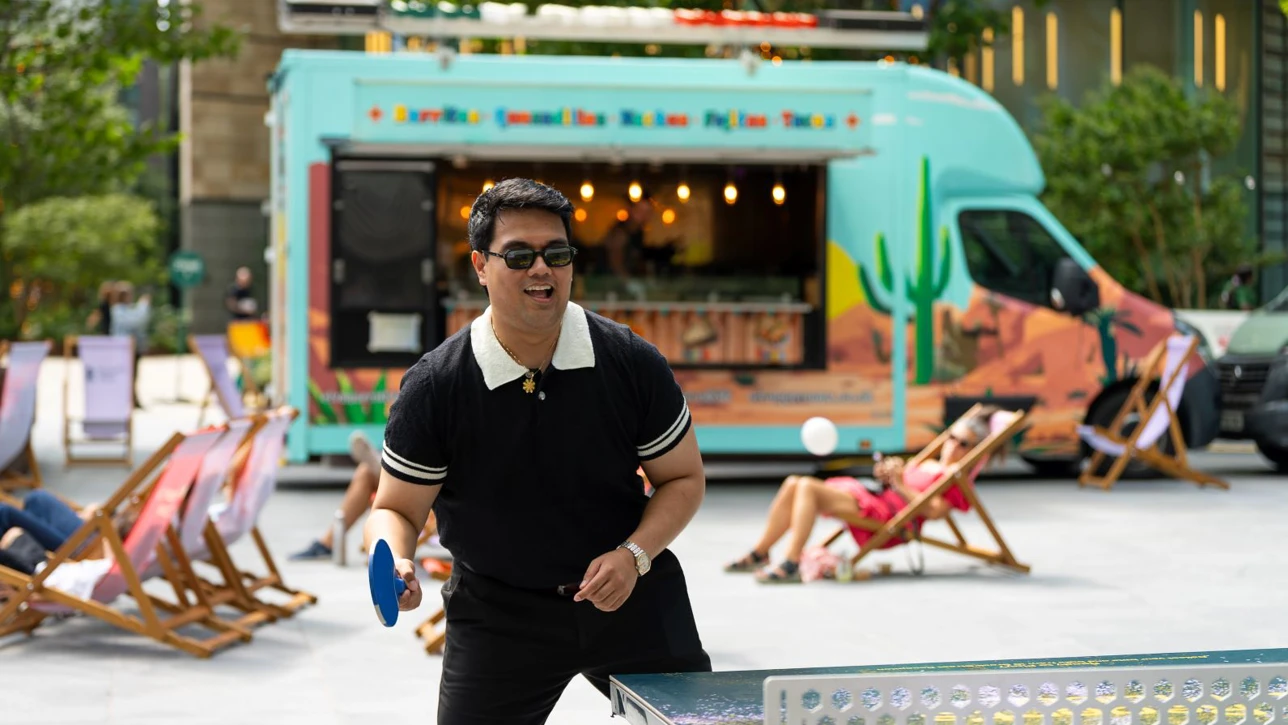
Our colleagues are looking forward to being part of a campus environment, experiencing the benefits of our strategy first hand. Even during the fit out, we’ve seen the impact of campus relationships: sourcing artwork from Hypha Studios on the campus and our fit out contractor fundraising for Regent's Place Community Fund – a collaboration of campus businesses – and engaging with Camden schools to raise awareness of careers in our sector
A workplace with a purpose
Our ambition is to create a workplace that colleagues feel genuinely proud of, where our values are reflected in every detail and sustainability is visible in the choices we've made. Move-in day isn’t the finish line. Some of the materials and technologies we’ve introduced are ongoing pilots. We will continue to monitor our performance, learning from the results and applying those lessons to future projects.
Our ambition is to create a workplace that colleagues feel genuinely proud of, where our values are reflected in every detail and sustainability is visible in the choices we've made. Move-in day isn’t the finish line. Some of the materials and technologies we’ve introduced are ongoing pilots. We will continue to monitor our performance, learning from the results and applying those lessons to future projects.
Fit for the future
Fit out is one of the most untapped sustainability opportunities in our industry. Throughout 20 Triton Street, plaques bring to life the sustainability stories behind key features, revealing the thinking, materials and innovations that shaped the space. We hope our new head office inspires fresh conversations with customers and partners about how we can collaborate to create sustainable, future-ready workplaces. If it encourages more organisations to think differently about fit out, it will have achieved far more than simply creating a new office.
OUR Sustainability Fit Out Brief in Practice
Discover the sustainable materials, innovative approaches and social impact behind 20 Triton Street.
DECARBONISATION
To reduce embodied and operational emissions on our fit outs, we reuse as much as possible and prioritise energy efficient equipment. This not only cuts carbon but also creates unique workspaces and often delivers cost savings. 20 Triton Street achieved upfront embodied carbon of 103kg CO2e per sqm, significantly outperforming industry benchmarks of 190kg CO2e per sqm for major fit outs and in line with our core target of 100kg CO2e per sqm.
Rethinking building services
Systems used to heat and cool buildings are major contributors to both embodied and operational carbon. At 20 Triton Street, we chose Artus units, which provide the on-floor heating and cooling, delivering 39% lower embodied carbon and 87% fan energy savings compared to traditional ducted fan coil systems. These savings are achieved through an optimised design that reduces material use and embodied carbon by minimising secondary components and cuts fan energy demand and operational costs by reducing air pressure losses.
To improve operational efficiency and support wellbeing, our new workplace also uses a demand-led ventilation system, with VAV technology and CO₂ sensors responding to occupancy levels to supply fresh air exactly when and where it’s needed.
CIRCULAR ECONOMY
Keeping materials in use for as long as possible is crucial to the future of real estate, safeguarding resource availability long term and meeting decarbonisation targets. Our starting point on all fit outs is simple: How much can we retain and reuse?
Tackling a carbon hotspot: task chairs
Few people realise that task chairs can account for more than half the embodied carbon of a furniture package. At 20 Triton Street, we partnered with Dodds & Shute to source more than 300 pre-owned task chairs via an extensive network of circular suppliers, reducing their embodied carbon by around 80% compared to purchasing new. Dodds & Shute thoroughly assessed every chair for quality, refurbishing them where required. The approach built on our successful use of remanufactured Orangebox Do task chairs at 1 Triton Square.
Giving lighting a second life
Most fit outs specify new lighting. We take a different approach. At 20 Triton Street, we reclaimed and repurposed 330 metres of linear lighting from a previous commercial project, saving an estimated four tonnes of embodied carbon versus new, while providing the same high-quality design and performance. This was only possible through collaboration. 18 Degrees recovered, stripped, resprayed and rewired the fittings, upgrading them with low-glare UGR19 diffusers and adding 3D-printed replacement end caps where needed, before rigorously testing every unit. BES and Thirdway developed an installation strategy using bespoke jigs and carefully sequenced works to ensure safe, efficient and precise delivery, while protecting the refurbished finish. This project demonstrates the importance of designing for disassembly and reuse from the outset, so more materials can be recovered rather than replaced.
Additional reused items across 20 Triton Street include armchairs, tables, meeting room chairs, carpet tiles in booths, pendant lighting lines, ottomans and ironmongery.
Passporting materials for future reuse
All key fit out materials at 20 Triton Street are digitally passported – from ceiling systems, flooring and finishes to joinery, lighting, furniture, MEP infrastructure and partitions.
Working with Material Index, these passports track where each item came from, what it’s made of and how to care for it, along with its potential for disassembly and reuse. In partnership with Thirdway, we’ve also piloted physical barcode tagging across the project, linking every tagged asset directly to its digital passport.
By making materials more visible and traceable, we’re making them easier to recover. This transforms 20 Triton Street into a material bank for future projects, reducing future waste, preserving value and unlocking carbon savings through reuse.
Explore our live materials passports
Furniture from our former head office was responsibly redistributed to other company locations, while materials inherited from the previous 20 Triton Street fit out were diverted for reuse. This included donating seating, lighting, timber flooring, acoustic panelling, door hardware and glass partitions to London-based social enterprises and small businesses, as well as returning ceiling tiles to the manufacturer through a take-back scheme.
Additional high recycled content materials
| Autex grid acoustic panels | Combining high acoustic performance with 80% recycled content. |
| Bolete coffee table | Featuring a base made from 100% recycled polymer waste. |
| Buxkin recycled leather cladding | Remanufactured from reconstituted shoe industry offcuts to create decorative panels. |
| Elenite Foresso worktops | Engineered from post-industrial waste and recycled resin, with bamboo fibre from furniture industry by-products. |
| Mas Alusid tiles | Made from at least 95% recycled tile industry by-products and manufactured using energy efficient techniques. |
| Rammed Earth Plaster | A textured finish made from 100% natural clays, minerals, sands and earth pigments, all sourced in the UK. |
| Spared coffee table tops | Made with particles of recycled CDs and plastic bottles. |
| Yarn Collective Albee upholstery | Made from 100% recycled cotton. |
BIO-BASED MATERIALS
At 20 Triton Street, around 37% of fit out materials (by value) are bio-based – from timber and linoleum flooring finishes to cotton acoustic panels. Derived from renewable natural sources such as plants, trees, agricultural by-products and fungi, bio-based materials typically have lower embodied carbon than conventional materials, which are often fossil fuel based or highly processed. Many bio-based materials also store biogenic carbon captured during plant growth, helping to reduce whole life emissions.
Leading the way with BioTwin's wall studs
Innovation starts with testing. So, we are trialling BioTwin's engineered hemp-composite wall studs within selected non-loadbearing partitions. Manufactured in the UK from hemp fibres, the solution delivers around 71.5% lower embodied carbon than conventional steel studs while also improving acoustic performance. One of the first UK office installations of its kind, our trial with Thirdway demonstrated that this lower-carbon alternative to traditional metal framing can be readily integrated into commercial fit outs.
A workplace that supports wellbeing
Beyond their environmental benefits, bio-based materials can contribute to wellbeing. Our linoleum flooring and bio-based carpets are certified to the highest indoor air quality standards, while our woodchip terrazzo worktop and cotton acoustic panels use natural or low-impact binders that minimise pollutants.
Wellbeing features in our new workplace include integrated planting and two dedicated wellbeing rooms. Together, they bring nature into the working day while providing quiet spaces to pause, focus and recharge.
Additional bio-based materials
| Archisonic Cotton Terra acoustic wall covering | Made from 75% cotton by-products, fully recyclable and supported by a take-back scheme. |
| Camira Monochrome Sett fabric | Woven from wool and 25% flax plant fibre. |
| Desso AirMaster carpet tiles | Featuring backing layers with high levels of bio-based and recycled content, and installed using reversible magnetic-tab fixings. |
| Forbo Marmoleum Cocoa flooring | Made from up to 98% natural raw materials, including cocoa shells. |
| Foresso woodchip terrazzo | Manufactured in the UK from waste timber – often recovered from London trees – and a bio-resin binder. |
| Interface CQuest carpet tiles | Featuring backing layers with high levels of bio-based and recycled content, and installed using reversible magnetic-tab fixings. |
| Yarn Collective Papyrus textile | Woven from 92% hemp and 8% paper. |
For decades, we’ve worked closely with the communities around Regent’s Place, creating lasting social impact through the use of our spaces and our employment and education programmes. With our move to 20 Triton Street, we’re excited to build on these strong foundations and deepen our connections with both the neighbouring community and campus customers.
We will continue to partner with campus customers to co-fund local projects through the Regent’s Place Community Fund and to bring businesses together through the Regent’s Place Customer Network, led by our dedicated Social Impact Manager.
Find out more at: www.regentsplace.com/thriving-places
EDUCATION
Working with Thirdway and charity partner Career Ready, our 20 Triton Street fit out gave 30 local young people insights into careers in construction and the built environment. Students from Haverstock School and Capital City College King’s Cross took part in workshops and a site tour, going behind the scenes to see how places are designed and delivered, with the aim of broadening aspirations and informing future career choices. One student made such an impression that they secured a work experience placement with Thirdway.
Following our move, Camden students and schoolchildren will continue to benefit from our education programmes. These include our long-standing Young Readers partnership with the National Literacy Trust and art partnerships with local schools. For years, our art curator has led art tours for students, while loans from our collection, including a Joe Tilson work to Regent High School, give them first-hand access to original works of art.
ART
Meeting spaces across 20 Triton Street showcase works from our art collection celebrating Camden’s artistic and cultural heritage. CAMDEN CONNECTIONS spans painting, printmaking, sculpture and mixed media, featuring artists connected to the area through studios, teaching, public commissions and creative communities. Many have links to the Slade School of Fine Art and artistic networks that have shaped Camden for more than a century. Together, the works explore landscape, materiality, urban change and public life, reflecting our commitment to culture, sustainability and community.
Selected locations also feature CAMPUS CONNECTIONS, artworks inspired by our wider London campuses. Each reflects the distinct identity, architecture and character of its location, highlighting the role of art in creating connected, inclusive places across our portfolio.
Art is central to Regent's Place, contributing to an environment that inspires creativity, supports wellbeing and encourages engagement. The campus is home to permanent works by Antony Gormley, Gary Hume and Julian Opie, while Wonderscope by Alisa Ruzavina was added as part of the Regent’s Park Estate Story Trail in 2025, produced by Regent's Place-based Old Diorama Arts Centre.
SPACE
In moving to 20 Triton Street, we're proud to become part of a building that is home not only to leading global businesses, but also to New Diorama Theatre – a pioneering, multi-award-winning studio theatre and long-standing partnership between British Land, Camden Council and the theatre. Named by Time Out as ‘a must-visit destination for London theatregoers’, it brings accessible culture to Regent's Place and the local community.
Across the wider campus, a mix of community spaces helps make Regent’s Place unique. As we move into 20 Triton Street, these include: Change Please coffee cart run by people affected by homelessness, Hypha Studios showcasing emerging artists, Little Village baby bank for families in need and Old Diorama Arts Centre for artists and communities.
Working in partnership with Thirdway, we embedded responsible procurement throughout the fit out. 88% of all contractors appointed were small and medium-sized enterprises (SMEs), while 43% were London-based, including Thirdway itself. This generated millions of pounds of economic value, supporting the growth of small businesses and local economies across the UK.
The boardroom tables were crafted by Camden-based SME Fallen & Felled, which repurposes fallen trees into high-quality furniture, with the table bases crafted from a tree that fell on Camden Road, within two miles of our new head office. Working from its workshop on Hartland Road, the business plays an active role in the borough, including judging Camden’s Green Dragon’s Den in 2026 to help local schoolchildren develop green skills.
We also ensured everyone working regularly on site was paid at least the real Living Wage, including contractors and subcontractors. Paying fair wages is not only the right thing to do; it also helps us attract and motivate the best talent to provide services to customers at our places, while creating lasting social value through our supply chain.
JOIN OUR JOURNEY
Based in a British Land building? Get in touch with our sustainability team to explore what's possible.