

From risk to resilience: solving the split incentive
Split incentive – where costs and benefits sit in different places – is often described as one of the biggest barriers to decarbonising commercial real estate. Owners typically fund upgrades, while occupiers benefit from efficiency savings. The result is delay, underinvestment and, ultimately, stranded assets.
However, split incentive is not insurmountable. In our experience, it can be solved by owners taking a long term view, partnering with occupiers and investing collaboratively. And the outcome is better workplaces, more resilient buildings and shared value for investors and occupiers.
TAKING A LONG TERM VIEW
For decades, the default approach to end-of-life equipment has been like-for-like replacement: boilers replaced with boilers; chillers with chillers; fans with fans. While this approach keeps buildings running, it often locks in inefficiency for years.
As long term owners, we take a different approach, treating end-of-life moments as opportunities to improve performance, cut emissions and futureproof assets. Increasingly, that means electrification — replacing gas systems with heat pumps and ambient loops. Done well, electrification lowers operational costs, enhances energy efficiency, creates more comfortable working environments, upgrades EPC ratings and prevents CRREM misalignment.1
PARTNERING WITH OCCUPIERS
Technology alone does not solve the split incentive — partnership does. So, we engage early with occupiers and build deep relationships. With in-house engineering and sustainability expertise, we are able to provide occupiers with clear evidence of the operational and financial benefits of planned upgrades. Crucially, we also schedule upgrades for the right point in the building life cycle, minimising whole life carbon and service charge impacts.
Technology alone does not solve the split incentive — partnership does. So, we engage early with occupiers and build deep relationships. With in-house engineering and sustainability expertise, we are able to provide occupiers with clear evidence of the operational and financial benefits of planned upgrades. Crucially, we also schedule upgrades for the right point in the building life cycle, minimising whole life carbon and service charge impacts.
INVESTING COLLABORATIVELY
We’ve led £26m of investment in decarbonisation across our standing portfolio since 2019, including capital expenditure, monies recoverable through the service charge and occupier spend in their space. This has driven a 24% improvement in whole building energy efficiency across our managed portfolio versus 2019. Every building, lease and occupier profile is different, so no single funding structure works everywhere. In practice, British Land often forward funds projects and uses service charge loans to spread costs over multiple years. This collaborative approach shares both costs and benefits.

We’ve led £26m of investment in decarbonisation across our standing portfolio since 2019, including capital expenditure, monies recoverable through the service charge and occupier spend in their space. This has driven a 24% improvement in whole building energy efficiency across our managed portfolio versus 2019. Every building, lease and occupier profile is different, so no single funding structure works everywhere. In practice, British Land often forward funds projects and uses service charge loans to spread costs over multiple years. This collaborative approach shares both costs and benefits.
SOLVING THE SPLIT INCENTIVE IN PRACTICE
At 2 Kingdom Street, Paddington Central, our decarbonisation audit identified targeted interventions to improve performance and prevent CRREM misalignment from 2033. These included replacing gas boilers with air source heat pumps, upgrading LED lighting and installing CO₂ controls for demand-driven ventilation. We then completed these interventions over three years, recovering £1.8m through a six-year service charge loan. This transitioned the building to all-electric usage, improved energy efficiency by 37%, raised the EPC rating to B and aligned the asset with its CRREM carbon pathway through to 2047.
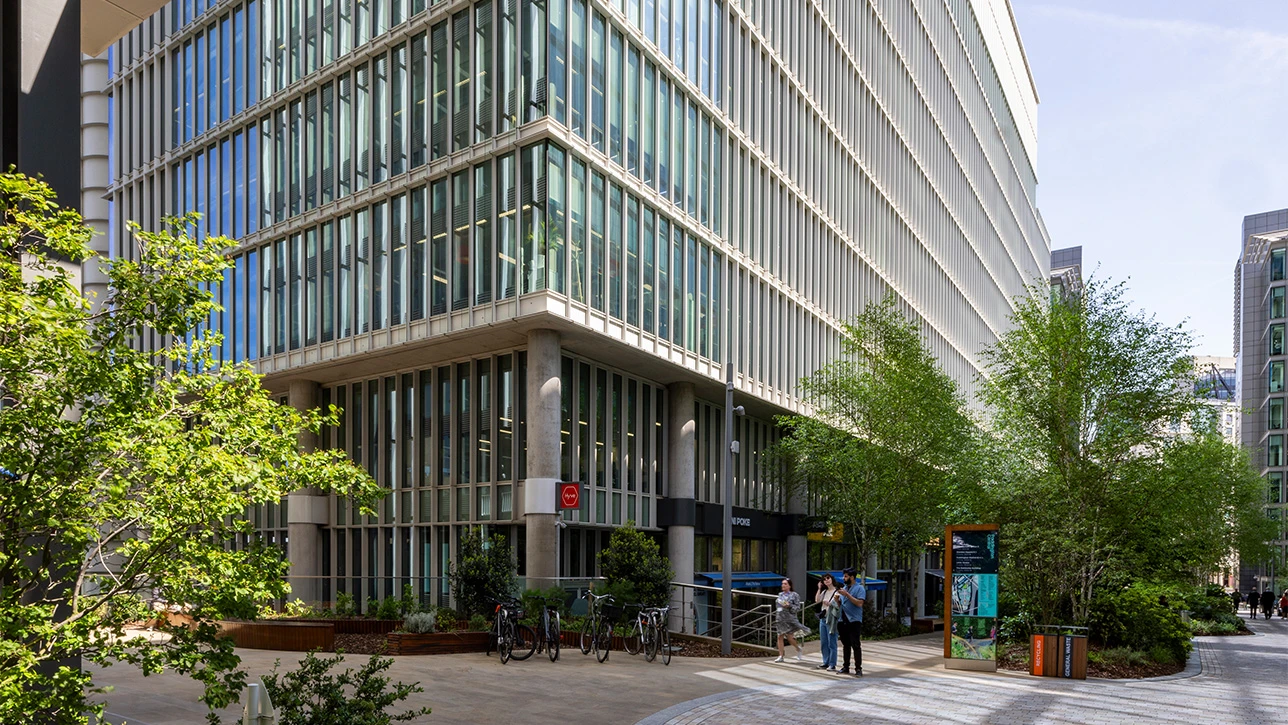
At 2 Kingdom Street, Paddington Central, our decarbonisation audit identified targeted interventions to improve performance and prevent CRREM misalignment from 2033. These included replacing gas boilers with air source heat pumps, upgrading LED lighting and installing CO₂ controls for demand-driven ventilation. We then completed these interventions over three years, recovering £1.8m through a six-year service charge loan. This transitioned the building to all-electric usage, improved energy efficiency by 37%, raised the EPC rating to B and aligned the asset with its CRREM carbon pathway through to 2047.
CHALLENGES REMAIN
While landlord-led interventions can transform base building performance, occupier fit outs and operational behaviours remain critical to decarbonisation. Our Sustainability Brief: Office Fit Out provides guidance on opportunities to improve operational efficiency. But even efficient systems have high energy consumption if they run 24/7. We therefore encourage occupiers to improve performance within their own spaces by testing optimisation measures in our Storey flexible workspace and sharing verified energy and cost savings data.
In addition, although we’ve achieved real success across offices, retail remains more challenging as we have less influence over customer energy procurement and consumption. We’re making good progress where we have control – 84% of our retail parks are now gas-free in landlord areas. We’re also actively seeking to partner with customers to reduce their energy consumption in shops and restaurants.
CREATING SHARED VALUE
For investors, the message is clear: active decarbonisation reduces risk and protects asset value.
For occupiers, the benefits are equally tangible: lower energy costs, better-performing space and measurable progress towards climate goals.
Join our journey
If you’re based in a British Land building, contact our sustainability team to find out more about decarbonisation plans for your building and discuss what we can do together.
sustainability@britishland.comExplore our 2030 Sustainability Strategy
1 Carbon Risk Real Estate Monitor (CRREM) pathways provide science-based trajectories for how real estate must cut emissions to align with a 1.5°C future. More here