

Future-ready buildings: how CRREM supports the route to net zero

The future value, cost and desirability of a building are increasingly tied to how quickly it can decarbonise and whether it’s on track for net zero. That’s why British Land’s use of CRREM decarbonisation pathways is good news for customers and investors.
Net zero can feel like a slogan. Everyone’s “committed” and “on a journey”; every brochure looks reassuringly green. But behind the confident language sits a harder truth: buildings don’t decarbonise through ambition — they decarbonise through plans, investment and performance that can be measured and improved, year after year.
So what is CRREM — and why does it matter?
CRREM stands for Carbon Risk Real Estate Monitor. CRREM pathways provide science-based trajectories for how real estate must cut emissions to align with a 1.5°C future — the global target for limiting climate change. Importantly, they can be applied to individual buildings and entire portfolios – and they’re rooted in science.
Every building has a point at which, without improvement, it will become misaligned with a 1.5°C scenario. A point where carbon performance stops being a nice-to-have and starts becoming a commercial risk. That’s the carbon deadline. And it’s closer than many organisations think.
Sustainability isn’t a side project. It’s business critical and essential to protecting our environment.
Why are decarbonisation pathways important?
There’s a clear reason decarbonisation pathways have become a priority: investors and customers are driving demand. Investors want to understand risk. British Land uses CRREM pathways to strengthen our joint venture reporting and customer engagement. This helps answer the questions capital is asking: is this asset future-proof, and will it stay that way? During leasing, customers increasingly ask about decarbonisation pathways. CRREM is a powerful way to respond. It offers a credible, independent framework to explain where the building is today, what needs to happen next, and what the future looks like.
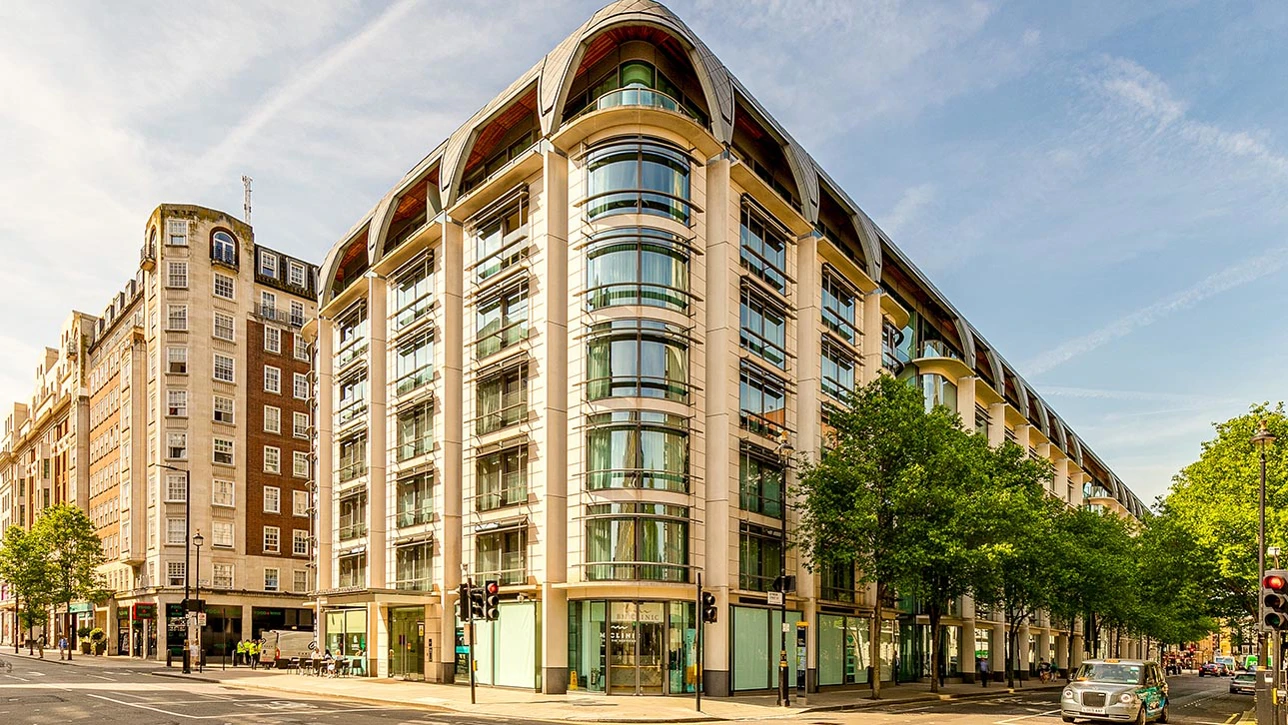
There’s a clear reason decarbonisation pathways have become a priority: investors and customers are driving demand. Investors want to understand risk. British Land uses CRREM pathways to strengthen our joint venture reporting and customer engagement. This helps answer the questions capital is asking: is this asset future-proof, and will it stay that way? During leasing, customers increasingly ask about decarbonisation pathways. CRREM is a powerful way to respond. It offers a credible, independent framework to explain where the building is today, what needs to happen next, and what the future looks like.
CRREM is turning “trust us” into “here’s the evidence”
CRREM also solves a challenge the real estate sector has quietly struggled with for years: it makes it easier to compare performance. Rather than being dependent on building owners’ self-defined targets – which often have different baselines and reporting methodologies – CRREM provides a clear, standardised methodology that doesn’t require heavy technical expertise or investment in accreditations.
There is still room for improvement though. CRREM is relatively new and doesn’t yet work equally well for all asset types. For example, premium fashion brands on retail parks are currently assessed against the same trajectory as large retail warehouses, despite having very different energy demands. In addition, CRREM’s early levelling year brings forward the net zero deadline, potentially requiring building systems to be replaced before their end-of-life under CIBSE guidance, increasing embodied carbon and misaligning with replacement cycles.
Whilst CRREM is not perfect, it’s the most robust framework available for deployment at scale and pace. We therefore welcome the ongoing consultation on its methodology and pathways.
The best part: when the plan becomes real
What’s most exciting now is seeing our decarbonisation pathways move from plans into reality. We’ve completed environmental audits for nearly 90% of buildings over five years old across our managed office portfolio, mapping out decarbonisation interventions all the way through to 2050. By upgrading equipment with more efficient versions at appropriate points in the life cycle – as kit reaches end of life – helps us reposition assets to respond to current market demand. This means they deliver excellent efficiency, which cuts energy bills for customers. Their EPC ratings are upgraded to B, so they’re ready for proposed MEES requirements well ahead of 2030.* They get high NABERS ratings. And they perform really well on their CRREM pathway – which is the icing on the cake.
Learn more about NABERS here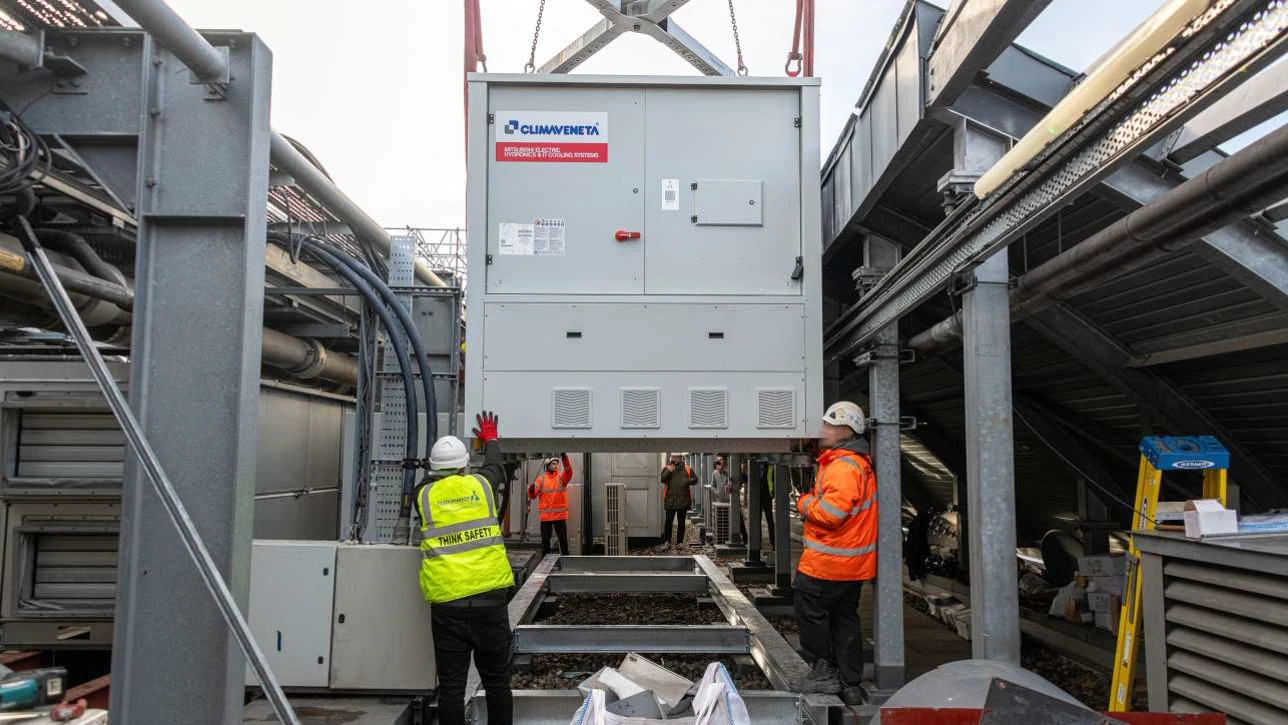
What’s most exciting now is seeing our decarbonisation pathways move from plans into reality. We’ve completed environmental audits for nearly 90% of buildings over five years old across our managed office portfolio, mapping out decarbonisation interventions all the way through to 2050. By upgrading equipment with more efficient versions at appropriate points in the life cycle – as kit reaches end of life – helps us reposition assets to respond to current market demand. This means they deliver excellent efficiency, which cuts energy bills for customers. Their EPC ratings are upgraded to B, so they’re ready for proposed MEES requirements well ahead of 2030.* They get high NABERS ratings. And they perform really well on their CRREM pathway – which is the icing on the cake.
Learn more about NABERS hereThe best low-carbon buildings aren’t just greener; they’re better buildings, full stop.
For building owners, a high-performing asset expands your options. It supports stronger leasing conversations. It gives confidence to investors about resilience. It improves liquidity at sale. It helps unlock green finance.
Call to action: occupiers, ask your building owner for more
If you occupy workspace, the simplest – and most powerful – first step is to start the conversation. Ask your building owner what their decarbonisation pathway is for your building. Ask how performance is being measured, and how you can play a role in improving it.

If you occupy workspace, the simplest – and most powerful – first step is to start the conversation. Ask your building owner what their decarbonisation pathway is for your building. Ask how performance is being measured, and how you can play a role in improving it.
Occupiers have agency here too, as their energy use is one of the biggest opportunities. And when owners and occupiers collaborate, decarbonisation accelerates and costs reduce.
One of the most exciting implications of CRREM is what will happen when it becomes widespread. If more landlords report against the same framework, investors will be able to benchmark portfolios more easily.
Join our journey
If you’re based in a British Land building, contact our sustainability team to discover where you sit on the pathway and explore what we can do together. Working collaboratively, we can create sustainable, future-ready space for your team and business.
Explore our 2030 Sustainability Strategy
* Proposed Minimum Energy Efficiency Standards (MEES) require non-domestic buildings to be rated EPC A or B by 2030.