

Can clay crack concrete’s carbon problem?
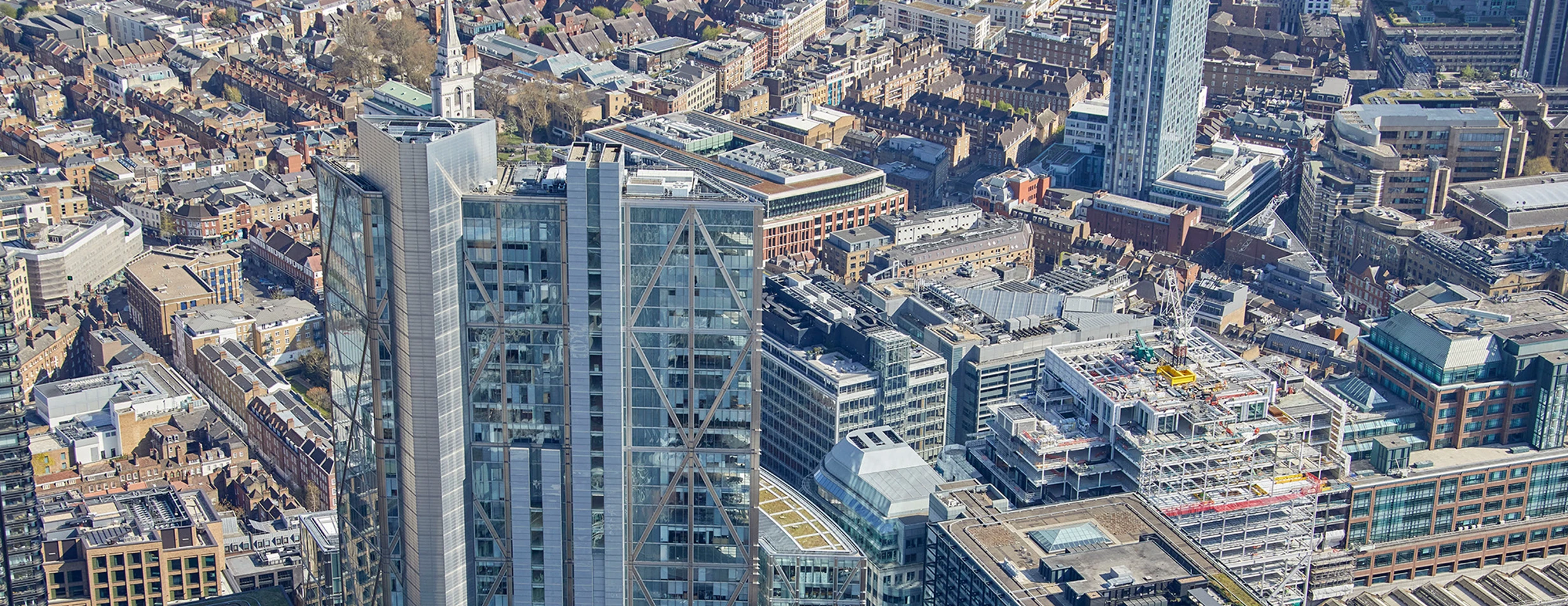
What a pilot at Broadgate Tower revealed about low-carbon construction.
To drive innovation, reduce embodied carbon and future proof concrete use - we need to find and test alternative solutions. It’s one of the most widely used materials in the world, yet incredibly difficult to change. Even small adjustments to what goes into concrete can affect safety, cost and construction processes. Which is why innovation in this space has traditionally been slow.
At British Land, we believe progress comes from practical action. Construction materials such as concrete are a significant contributor to our scope 3 greenhouse gas emissions, and we are committed to reducing embodied carbon across our developments by 50% by 2030. With Portland cement alone responsible for around 8% of global emissions, the industry needs innovation, research and integration into construction processes.
Why low-carbon concrete struggles to scale
One of the main barriers to developing more sustainable concrete is confidence. Suppliers are hesitant to invest without clear demand, while clients can be cautious about alternatives without proven performance. It’s a “chicken and egg” challenge.
Breaking this cycle requires leadership, collaboration and a willingness to test new approaches on live projects. Without seeking alternatives and progressing use on projects, we risk staying stuck in trials and even an increase to the embodied carbon of our projects in the short term if we do nothing. However, if effort in this space becomes mainstream and focuses on knowledge sharing, we can progress towards the common goal.
At Broadgate Tower, we set out to help change that.
Live innovation: 33 storeys up
In partnership with BAM Construction and Getjar, we used Broadgate Tower to trial the first concrete pour as a live test on permanent works using a concrete mix that contained calcined clay as a replacement for 30% of the cement content.
The 10m³ pour formed a plant deck slab at level 33 of the building, supporting newly installed air source heat pumps. While delivering a new concrete mix at this height added complexity, it provided real-world proof that the material could be used safely and effectively in demanding conditions.
Through this collaboration experimenting has built confidence in this concreate as well as piloting alternative materials in future projects.
Why calcined clay?
Reducing the carbon impact of concrete often means replacing a portion of cement with lower-carbon materials.
Calcined clay is a strong viable alternative. It delivers similar carbon savings carbon savings as ground granulated bottom slag (GGBS) which comes from the steel making industry. At the same time, given that it is a naturally occurring material, we are future-proofing our supply as we see the availability of popular byproducts dwindle.
Since common cement materials are often a byproduct of fossil fuel associated industries, and the move away from blast furnaces and power stations, these materials are becoming increasingly scarce. In reference to a report completed by the Institute of Structural Engineers, what is becoming clear to the industry is that GGBS is becoming a limited and constrained global resource. Without the search for alternatives, embodied carbon in construction could rise in the short term simply due to limited supply.
Key lessons
The pilot delivered encouraging results:
- Cube testing: The concrete exceeded required strength levels after 28 days, demonstrating suitability for structural use. With C32/40 mix achieving an average strength of 52N/mm2, notably stronger than the 40N/mm2 requirement.
- Strength and performance: Early strength development is crucial for programme delivery, as it enables pours to be released from the shuttering moulds and formwork. At day 7 the strength gain for the 30% calcined clay mix, comparable to a concrete mix with GGBS.
- Programme compatibility: Early-age strength was comparable to traditional lower-carbon mixes, supporting timely removal of formwork and onward construction.
- Cost: There is currently a cost uplift of around 23% compared to conventional cement mixes, which is expected to reduce as demand and scale increase.
- Supply: Calcined clay was supplied by Heidelberg from its Kunda plant in Estonia. Heidelberg are looking to scale up their supply source from Luxembourg, Belgium and Ghana. And so, responsible sourcing criteria will need to be considered.
- Logistics: It is understood that the concrete mix would be pumpable by concrete pumps but this has not yet been trialled. Due to site constraints, the concrete was transported to level 33 using lifts and mortar buckets.
- Finish: Initially starting as a brown-reddish colour, it cures to a subtler colour. As to be expected, there are variations to the concrete depending on origin.
The collaboration gave the team confidence – not just in the material, but in the fundamentals needed to scale novel cements that can make a meaningful impact on embodied carbon.
Looking ahead
This pilot wasn’t about a single slab of concrete. It was about building the data, experience and confidence needed to support wider adoption. The test results from Broadgate Tower are now available to inform further development and scaling of calcined clay concrete mixes. By proving that calcined clay concrete can perform in permanent works, even 33 storeys up, we are helping turn emerging alternatives into practical options for the industry.
To progress this further, we are partnering with the industry Accelerating Concrete Decarbonisation Group (AC-DG) over the next year, alongside 20 partners including Derwent, GPE, Landsec, Related Argent, Imperial College, Getjar and BAM. This partnership will deliver up to 3 concrete prototypes using calcined clay and novel concrete mixes. The prototypes will be constructed this year and will be followed up with a testing regime to generate data that will inform and give confidence as to how we can continue to use these concretes more in permanent elements of our concrete frames.
Decarbonising construction will not be achieved over night nor is there a simple solution. Instead, it will depend on marginal steps towards action; planned, tested and delivered in partnerships like the AC-DG.
Explore our 2030 Sustainability Strategy: Greener Spaces, Thriving Places, Responsible Choices: www.britishland.com/sustainability